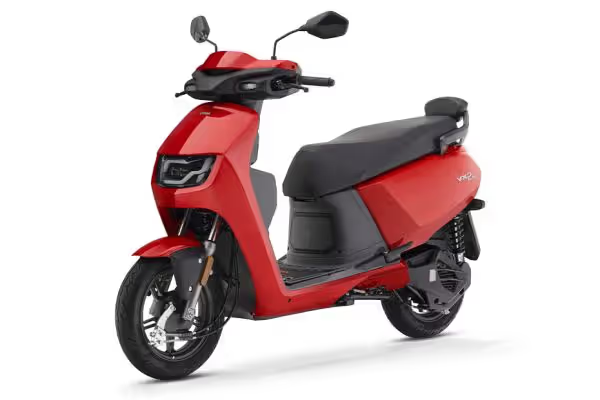
VIDA Electric Scooter: Features, Range, Technology, Charging and Buying Guide
Electric scooters have become an important part of urban mobility in India. They can offer lower day-to-day energy costs, quieter operation and reduced dependence on petrol. Among the brands competing in this segment, VIDA, powered by Hero MotoCorp, has developed a range of electric scooters focused on everyday commuting, connected technology and removable batteries.
This guide explains the VIDA electric scooter range, battery technology, charging, performance, ownership considerations and important factors buyers should evaluate before making a purchase.
What Is a VIDA Electric Scooter?
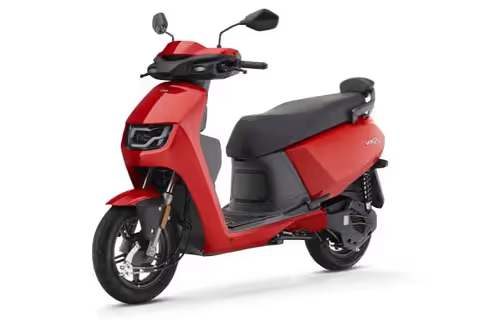
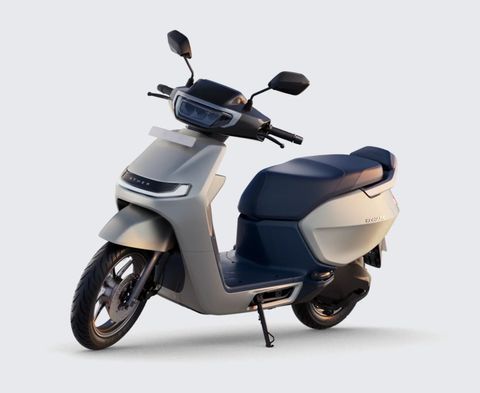
VIDA is Hero MotoCorp's electric mobility brand. The company introduced the VIDA V1 in 2022 and subsequently expanded its portfolio with models such as the V2 range and VX2.
The current VIDA portfolio includes models such as the VX2 Go, VX2 Plus, V2 Pro and V2 Plus, with specifications varying between versions.
Unlike a conventional petrol scooter, a VIDA electric scooter uses a battery-powered electric motor. Depending on the model, the battery can be removed and charged separately, which can be useful for people who do not have convenient access to a dedicated parking charger.
VIDA Electric Scooter Models
VIDA VX2
The VX2 is positioned around practical urban transportation and is available in different battery and equipment configurations.
The VX2 Plus specification includes a 3.4 kWh battery, 80 km/h displayed top speed and up to 142 km IDC range. The VX2 Go specification listed by VIDA uses a 2.2 kWh battery, 70 km/h top speed and up to 92 km IDC range.
The manufacturer also introduced a VX2 Go 3.4 kWh version in November 2025, adding another configuration for buyers seeking greater range.
VIDA V2
The V2 family includes V2 Pro and V2 Plus models. VIDA introduced the V2 range as the next generation of its electric scooter portfolio after the V1.
The V2 models are aimed at consumers looking for a combination of electric performance, connectivity and everyday scooter practicality.
VIDA Electric Scooter Battery Technology
Removable Batteries
One of the notable features of VIDA's electric scooter lineup is removable battery technology. VIDA states that its electric scooter models allow the battery to be removed and charged away from the scooter.
This can be particularly useful for:
- Apartment residents
- Office commuters
- Riders without a private parking socket
- Users who prefer indoor battery charging
- Households that need flexible charging options
The VX2 Plus, for example, uses two removable batteries, while the VX2 Go specification uses one battery.
Battery Protection
Battery management is an important consideration when evaluating an electric vehicle. VIDA's VX2 specifications list an IP67 battery rating, providing protection against dust and water under the applicable testing conditions.
However, an IP rating should not be interpreted as permission to deliberately expose the scooter or battery to extreme water conditions.
VIDA Electric Scooter Range
Range is one of the most important factors when comparing electric scooters.
The manufacturer's IDC figures for selected VX2 versions are:
| Model | Battery | IDC Range | Top Speed |
|---|---|---|---|
| VX2 Plus | 3.4 kWh | Up to 142 km | 80 km/h |
| VX2 Go | 2.2 kWh | Up to 92 km | 70 km/h |
| VX2 Go 3.4 kWh | 3.4 kWh | Up to 100 km real-world range* | 70 km/h |
The first two figures are IDC figures from VIDA's specifications, while the 3.4 kWh Go's 100 km figure is the manufacturer's stated real-world range.
IDC Range vs Real-World Range
Consumers should not assume that an IDC range figure will always match their daily experience.
Actual range can be affected by:
- Riding speed
- Acceleration habits
- Rider and passenger weight
- Road conditions
- Traffic
- Tyre pressure
- Temperature
- Battery condition
- Riding mode
VIDA itself notes that real-world range depends on riding behaviour, battery health, rider weight, road conditions and tyre pressure.
For this reason, buyers should consider their normal daily distance rather than choosing a scooter solely on its maximum advertised range.
VIDA Electric Scooter Performance
Electric motors can deliver torque without the same transmission characteristics as traditional petrol scooters.
The VX2 Plus is specified with a 6 kW peak-power PMSM motor, a claimed 0–40 km/h acceleration time of 3.1 seconds, and three riding modes: Eco, Ride and Sport.
The VX2 Go uses the same listed peak motor power but has different battery capacity, acceleration and riding-mode specifications.
Riding Modes
Different riding modes can help riders balance performance and energy consumption.
Eco mode generally prioritizes efficiency.
Ride mode provides a balance between everyday performance and energy use.
Sport mode, where available, is intended for stronger performance and can consume energy faster.
The availability of each mode depends on the specific VIDA model and variant.
VIDA Electric Scooter Charging
Charging convenience is an important part of electric scooter ownership.
The VX2 specifications list different charging times depending on battery configuration. The VX2 Plus is listed at approximately 5 hours 39 minutes for 0–100% charging, while the VX2 Go is listed at approximately 3 hours 53 minutes under the stated conditions. Both are also specified with fast-charging capability.
VIDA's specifications also list fast charging to 80% in approximately 62 minutes under specified battery and ambient-temperature conditions.
Home Charging
Home charging can be convenient when riders have suitable electrical access.
Removable batteries add another option because the battery can be taken to an appropriate charging location rather than requiring the entire scooter to remain next to a charging point.
Public Fast Charging
Public charging can be useful for longer journeys or when a rider needs to replenish energy during the day. VIDA currently advertises thousands of fast-charging points across its network.
Availability can vary by city and location, so prospective buyers should check charging infrastructure around their regular routes.
VIDA Connected Technology
Modern electric scooters increasingly combine transportation with connected software.
Selected VIDA models include smartphone connectivity, navigation and over-the-air software capabilities. The VX2 Plus and VX2 Go specifications list connectivity, turn-by-turn navigation and OTA compatibility.
VIDA has also highlighted features such as smartphone integration, ride statistics, telemetry and firmware updates for the VX2.
These features can make it easier for owners to monitor vehicle information and manage aspects of their riding experience.
Storage and Everyday Practicality
Electric scooters need to be practical as well as technologically advanced.
The VX2 specifications list under-seat storage of 27.2 litres for the VX2 Plus and 33.2 litres for the VX2 Go, along with front storage capacity.
Other practical features include:
- Flat floorboard
- Long seat
- Two-person seating
- LED lighting
- Alloy wheels
- Phone charging
- Connected features
The VX2 Go's larger storage capacity can be particularly useful for everyday commuting and carrying personal items.
VIDA Battery-as-a-Service Model
One distinctive aspect of VIDA's EV ownership strategy is its Battery-as-a-Service (BaaS) approach.
Under this model, customers can subscribe to the battery rather than paying the complete battery cost upfront. Hero MotoCorp introduced this approach with the VX2 in 2025 as a way to reduce the initial ownership cost and provide a different ownership structure.
Why BaaS Matters
A battery subscription can change how consumers evaluate the total cost of an electric scooter.
Instead of looking only at the purchase price, buyers should consider:
- Initial vehicle cost
- Battery subscription charges
- Electricity expenses
- Charging costs
- Insurance
- Maintenance
- Financing costs
- Expected annual kilometres
- Long-term ownership period
This approach gives consumers a more realistic picture of the total cost of ownership.
VIDA Electric Scooter Cost Considerations
Electric scooter affordability should not be judged only by the showroom price.
A useful financial comparison should include both fixed and variable costs.
Upfront Cost
The upfront cost may include the scooter, applicable battery arrangement, registration, insurance and other charges.
VIDA's 2025 VX2 launch announcement listed different ex-showroom prices depending on whether customers selected the BaaS or non-BaaS model. Because prices and offers can change, buyers should verify the current price before making a purchase.
Running Cost
Electric scooters generally use electricity rather than petrol, so operating expenses depend heavily on electricity rates and annual usage.
A simple calculation is:
Annual charging cost = electricity consumed × electricity tariff
Actual consumption varies according to riding conditions and charging losses.
Maintenance Expenses
Electric scooters generally have fewer engine-related components than petrol scooters because they do not use a conventional internal-combustion engine.
However, owners still need to consider:
- Tyres
- Brakes
- Suspension
- Bearings
- Electrical components
- Battery health
- Software
- General servicing
Is a VIDA Electric Scooter Suitable for Daily Commuting?
For many urban riders, an electric scooter can be practical when daily travel distances are predictable and charging is convenient.
A VIDA scooter may be worth considering if you:
- Mostly travel within a city
- Want a petrol alternative
- Prefer removable batteries
- Have access to home or workplace charging
- Value connected technology
- Want to compare different ownership models
- Are comfortable planning longer journeys around charging infrastructure
However, people who frequently travel long distances through areas with limited charging infrastructure should evaluate their routes carefully.
Factors to Check Before Buying a VIDA Electric Scooter
1. Calculate Your Daily Distance
Write down your average weekday and weekend travel. This gives you a better basis for choosing battery capacity.
2. Compare Real-World Range
Do not compare scooters using only IDC figures. Look at expected real-world range for your riding conditions.
3. Check Charging Access
Consider where you will charge the battery every day. Removable batteries are useful only when there is a practical and safe place to charge them.
4. Understand the Ownership Plan
If choosing BaaS, carefully review the subscription terms, recurring costs and conditions.
5. Compare Financing Options
Consumers considering an electric scooter may encounter vehicle loans, consumer financing and other payment options. Compare the annual percentage rate, processing fees, repayment period and total repayment, rather than selecting financing based only on the monthly payment.
6. Check Insurance and Registration Costs
The complete on-road cost can be different from the advertised ex-showroom price. Obtain a current quotation before budgeting.
7. Evaluate Service Availability
VIDA currently advertises a nationwide service network and roadside assistance.
Nevertheless, buyers should check the availability of authorized service support in their own city.
VIDA Electric Scooter vs Petrol Scooter
The choice between an electric and petrol scooter depends on individual usage.
| Factor | Electric Scooter | Petrol Scooter |
|---|---|---|
| Energy source | Electricity | Petrol |
| Local emissions while riding | No tailpipe emissions | Produces exhaust emissions |
| Refuelling/charging | Requires charging | Petrol station |
| Daily running cost | Depends on electricity tariff | Depends on petrol price |
| Engine maintenance | Not applicable | Required |
| Long-distance planning | Charging may matter | Usually simpler |
| Noise | Generally quieter | Engine noise |
| Home energy use | Possible with suitable setup | Not applicable |
Neither option is automatically ideal for every rider. The best choice depends on travel distance, infrastructure, budget and ownership preferences.
Financial Factors to Consider When Buying an EV
Electric mobility also creates an opportunity to compare several financial factors rather than focusing only on the vehicle price.
Useful comparison terms include:
- Electric scooter financing
- EV loan interest rate
- Vehicle finance options
- Total cost of ownership
- EV insurance
- Charging cost
- Battery warranty
- Maintenance cost
- Electric vehicle incentives
- Ownership cost calculator
These are useful research areas because they help consumers understand the complete financial commitment associated with an electric scooter.
Government incentives and tax policies can change over time, so buyers should verify eligibility and current rules through official sources before including any subsidy in their purchase calculation.
Frequently Asked Questions
Is VIDA an electric scooter brand?
Yes. VIDA is Hero MotoCorp's electric mobility brand, offering electric two-wheelers in India.
Does the VIDA electric scooter have a removable battery?
Yes. VIDA states that its electric scooter models use removable batteries that can be charged separately from the scooter.
What is the range of the VIDA VX2?
The range depends on the variant. VIDA's specifications list up to 142 km IDC range for the VX2 Plus and up to 92 km IDC range for the VX2 Go.
How long does a VIDA battery take to charge?
Charging time varies by model and battery configuration. The VX2 specifications list different standard charging times and fast-charging capabilities, including approximately 62 minutes to 80% under specified conditions.
Is VIDA VX2 suitable for city riding?
Its specifications and features are designed around everyday urban mobility, including removable batteries, storage, multiple riding modes and connected technology. Individual suitability depends on daily distance, road conditions and charging access.
Final Thoughts
The VIDA electric scooter range combines electric propulsion with features designed for everyday commuting. Removable batteries, connected technology, multiple riding modes, storage and different battery configurations give buyers several factors to consider.
For consumers, the most important decision should not simply be "Which electric scooter has the highest range?" Instead, evaluate the complete ownership equation: purchase price + financing + charging + insurance + maintenance + battery arrangement + expected usage.
That approach can help buyers make a more informed financial decision and determine whether a VIDA electric scooter fits their commuting requirements.
Note: Specifications, prices, financing offers, charging networks and government incentives can change. Always verify the latest information from VIDA or an authorized dealer before making a purchase.