Guide to Medical-Grade Wearables: How Your Smartwatch Is Becoming a Lifesaving Device
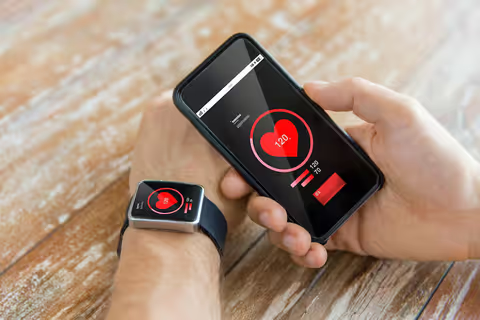
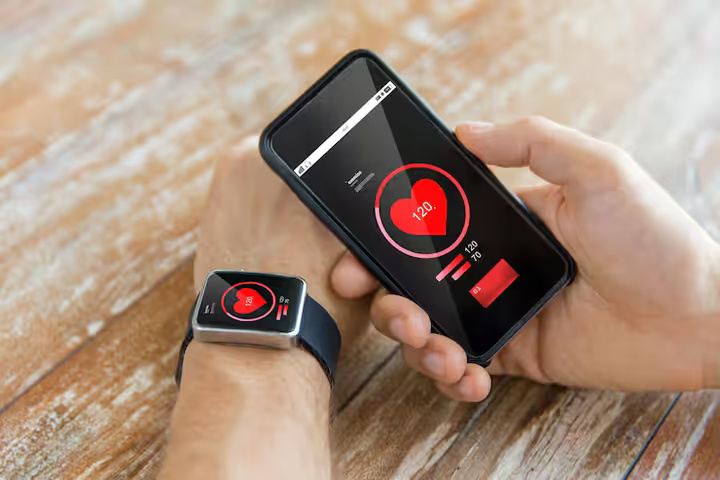
Medical-grade wearables are electronic devices designed to continuously monitor health-related data with a level of accuracy suitable for clinical use. Unlike basic fitness trackers that count steps or calories, these devices focus on medically relevant metrics such as heart rhythm, blood oxygen saturation, sleep patterns, physical activity, and, in some cases, blood pressure or glucose trends.
The idea behind medical-grade wearables emerged from the growing need to monitor health beyond hospitals and clinics. Traditional healthcare relies heavily on short, infrequent measurements taken during appointments. Many conditions, however, develop gradually or show symptoms only intermittently. Continuous health monitoring through wearable technology helps capture these changes in real-world settings, providing a more complete picture of an individual’s health over time.
Smartwatches and wearable sensors have become the most visible form of this technology. Advances in sensor miniaturization, cloud computing, and mobile health platforms have allowed everyday devices to perform functions once limited to specialized medical equipment.
Importance: Why Medical-Grade Wearables Matter Today
Medical-grade wearables matter because they address several modern healthcare challenges at once. Populations are aging, chronic diseases are increasing, and healthcare systems face pressure to provide effective care with limited resources. Continuous digital health monitoring offers a practical response to these issues.
Key groups affected include:
-
Individuals managing chronic conditions such as heart disease, diabetes, or sleep disorders
-
Older adults who require ongoing health observation
-
Healthcare professionals seeking better long-term patient data
-
Public health systems aiming to reduce preventable hospital visits
Problems these devices help address include:
-
Late detection of health issues due to infrequent checkups
-
Lack of real-time data for personalized medical decisions
-
Limited access to healthcare in remote or underserved areas
Below is a simplified comparison showing how traditional monitoring differs from wearable-based monitoring:
| Aspect | Traditional Monitoring | Medical-Grade Wearables |
|---|---|---|
| Data frequency | Occasional | Continuous or daily |
| Setting | Clinic or hospital | Everyday environment |
| Patient involvement | Passive | Active participation |
| Early detection | Limited | Improved trend detection |
By enabling remote patient monitoring and early warning signs, medical-grade wearables support preventive healthcare and informed clinical decisions.
Recent Updates: Trends and Developments in the Past Year
Over the past year, medical-grade wearables have seen notable technological and regulatory progress. Between mid-2024 and early-2025, several trends have shaped this field.
One major update has been the expanded use of artificial intelligence in health data analysis. Algorithms are now better at identifying irregular heart rhythms, sleep disturbances, and long-term health patterns from wearable data. These improvements aim to reduce false alerts and improve clinical relevance.
Another development is the broader integration of wearable health data into electronic health records. In 2024, multiple healthcare systems began supporting standardized data formats, allowing clinicians to review wearable-generated insights alongside traditional medical records.
Sensor accuracy has also improved. New optical and electrical sensors released in late 2024 provide more reliable readings for metrics like heart rate variability and blood oxygen levels, even during movement.
The following table highlights key recent trends:
| Year | Update Area | Description |
|---|---|---|
| 2024 | AI health analytics | Improved detection of heart and sleep patterns |
| 2024 | Data integration | Better compatibility with clinical record systems |
| 2025 | Sensor technology | Higher accuracy in everyday conditions |
These updates indicate a shift toward wearables being viewed as supportive clinical tools rather than consumer gadgets.
Laws and Policies: Regulatory Influence on Medical-Grade Wearables
Medical-grade wearables are shaped significantly by laws, standards, and regulatory frameworks. In many countries, these devices fall under medical device regulations when they provide health measurements intended for medical interpretation.
Regulatory authorities typically focus on:
-
Data accuracy and validation
-
User safety and reliability
-
Privacy and protection of health information
In the United States, wearable devices with medical claims must comply with Food and Drug Administration requirements. Similar regulatory bodies exist in the European Union and other regions, ensuring devices meet defined performance and safety standards.
Data privacy laws also play a major role. Health data collected by wearables is often classified as sensitive information. Regulations require transparency in data handling, secure storage, and user consent for data sharing.
Government health programs increasingly recognize the role of digital health tools. Some public health initiatives now encourage remote monitoring for chronic disease management, supporting the broader adoption of wearable health technology within regulated frameworks.
Tools and Resources: Helpful Platforms and References
A wide range of tools and resources support the use and understanding of medical-grade wearables. These resources focus on education, data interpretation, and interoperability rather than promotion.
Commonly used tools include:
-
Health data dashboards that visualize long-term trends
-
Mobile health applications for symptom tracking and alerts
-
Clinical guidelines explaining wearable data interpretation
-
Educational portals on digital health and remote patient monitoring
Examples of resource categories:
-
Standards organizations publishing wearable data guidelines
-
Academic research platforms sharing peer-reviewed studies
-
Public health websites explaining digital health initiatives
Below is a simple representation of how wearable data flows through a typical system:
These tools help ensure wearable health data is meaningful, secure, and usable in real-world healthcare settings.
FAQs: Common Questions About Medical-Grade Wearables
What makes a wearable “medical-grade”?
A medical-grade wearable meets specific accuracy, safety, and validation standards suitable for health monitoring and clinical reference.
Are smartwatches considered medical devices?
Some smartwatches include features that fall under medical device regulations when used for health monitoring purposes, depending on their functions and claims.
Can wearable data replace doctor visits?
Wearable data supports healthcare decisions but does not replace professional medical evaluation or diagnosis.
How accurate are medical-grade wearables?
Accuracy varies by metric and device, but medical-grade wearables are designed to meet higher validation standards than general fitness trackers.
Is wearable health data secure?
Most systems use encryption and privacy controls, but data security also depends on compliance with local data protection laws and user practices.
Conclusion
Medical-grade wearables represent a meaningful shift in how health is monitored and understood. By enabling continuous observation, early detection, and data-driven insights, these devices complement traditional healthcare approaches. Recent advances in sensor technology, artificial intelligence, and regulatory clarity have strengthened their role in modern health systems.
As policies evolve and digital health infrastructure improves, medical-grade wearables are likely to remain an important tool for supporting preventive care, chronic condition management, and informed clinical decisions. Their value lies not in replacing healthcare professionals, but in enhancing the quality and continuity of health information available for better outcomes.