A Complete Guide to Mammalian Cell Culture in Biotechnology
Mammalian cell culture is a biotechnology technique used to grow and maintain animal-derived cells under controlled laboratory conditions. These cells are typically grown outside the body in nutrient-rich environments that replicate natural physiological conditions such as temperature, pH, and oxygen levels.
This approach exists because many biological processes, especially those related to human health, cannot be accurately studied using simpler organisms like bacteria or yeast. Mammalian cells are capable of complex functions such as proper protein folding, post-translational modification, and regulated gene expression. These characteristics make mammalian cell culture essential for studying human biology and developing advanced biotechnological applications.
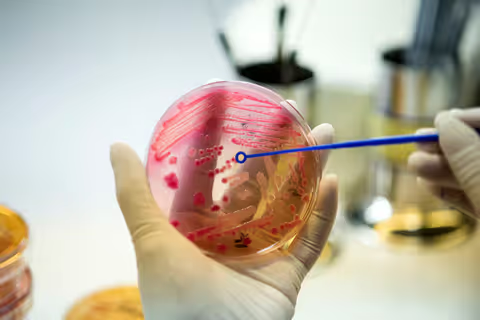
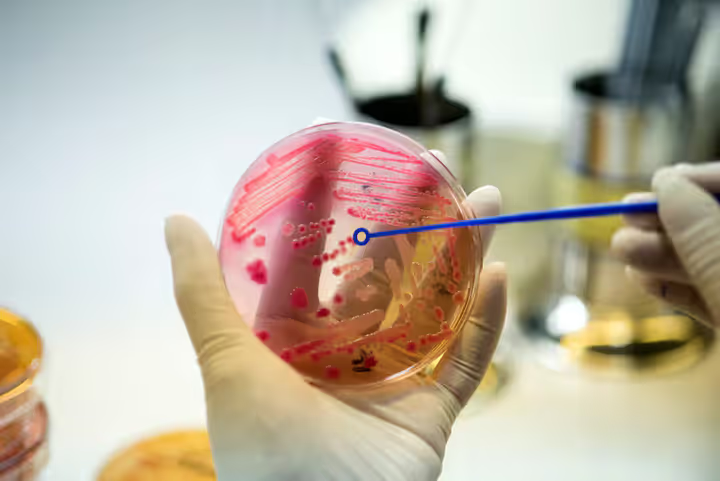
In practice, mammalian cell culture involves sterile techniques, specialized media, incubators, and monitoring systems. Cells may be grown in small laboratory flasks for research or scaled up in bioreactors for industrial biotechnology workflows.
Importance: Why Mammalian Cell Culture Matters Today
Mammalian cell culture plays a central role in modern biotechnology, biomedical research, and life sciences innovation. Its relevance has increased as science has shifted toward precision-based and biologically accurate systems.
Key reasons this topic matters include:
-
Biopharmaceutical development
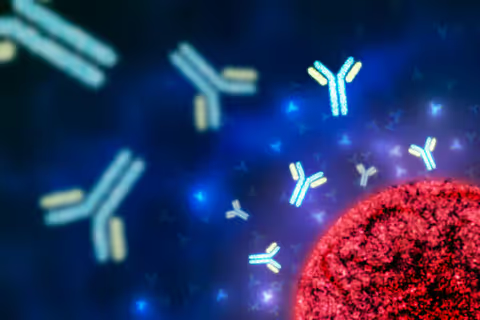
Many therapeutic proteins, vaccines, and monoclonal antibodies rely on mammalian cells for accurate biological activity. -
Medical and disease research
Cell culture models allow researchers to study cancer, genetic disorders, and infectious diseases in controlled environments. -
Safety and efficacy testing
Mammalian cells are widely used in toxicity testing and biological response evaluation before clinical studies. -
Personalized and advanced medicine
Patient-derived cells support tailored research approaches and improved understanding of treatment responses.
This field affects researchers, healthcare systems, regulatory agencies, and patients indirectly by supporting the development of safe and effective biological products. It also helps reduce reliance on animal testing by providing alternative in-vitro models.
Recent Updates: Trends and Developments in the Past Year
Over the past year, mammalian cell culture has continued to evolve due to technological, regulatory, and scientific advancements.
Notable developments include:
-
Early 2025 – Increased adoption of serum-free and chemically defined media
Laboratories are transitioning toward standardized media formulations to improve reproducibility and regulatory alignment. -
Late 2024 to 2025 – Growth in automation and digital monitoring
Automated incubators, real-time imaging, and AI-assisted quality monitoring are becoming more common in research facilities. -
2024–2025 – Expansion of single-use bioreactor systems
Disposable bioprocessing technologies are gaining acceptance due to reduced contamination risk and improved operational flexibility. -
Ongoing 2025 – Emphasis on data integrity and traceability
Digital recordkeeping and data validation practices are being strengthened to support compliance and research transparency.
These trends reflect a broader movement toward efficiency, consistency, and scalability in biotechnology workflows.
Laws or Policies: Regulatory Frameworks Affecting Mammalian Cell Culture
Mammalian cell culture is governed by scientific and ethical regulations that vary by country but follow similar principles worldwide.
Key regulatory influences include:
-
U.S. Food and Drug Administration (FDA)
Establishes guidelines for cell-based research and biologics development, emphasizing safety, quality, and documentation. -
European Medicines Agency (EMA)
Oversees biotechnology-derived medicinal products and promotes standardized laboratory practices across Europe. -
Good Laboratory Practice (GLP) frameworks
Applied internationally to ensure data accuracy, reproducibility, and ethical research conduct. -
Biosafety regulations
Define containment levels, waste handling, and personnel training for cell culture laboratories.
Government-supported research programs in many countries also encourage advanced cell culture research by funding infrastructure and training, provided regulatory compliance is maintained.
Tools and Resources Used in Mammalian Cell Culture
A wide range of tools and digital resources support mammalian cell culture workflows, from basic research to large-scale biotechnology operations.
Commonly used resources include:
-
Laboratory equipment
-
CO₂ incubators with humidity and temperature control
-
Biosafety cabinets for sterile handling
-
Inverted microscopes for cell observation
-
-
Culture systems
-
Adherent and suspension culture vessels
-
Microcarrier-based systems
-
Stirred-tank and perfusion bioreactors
-
-
Digital and analytical tools
-
Cell counting software and viability analyzers
-
Laboratory information management systems (LIMS)
-
Growth curve and productivity modeling tools
-
-
Educational and reference platforms
-
University biotechnology portals
-
Peer-reviewed scientific journals
-
Regulatory guidance libraries from public agencies
-
These resources help ensure accuracy, consistency, and regulatory alignment throughout the cell culture process.
Frequently Asked Questions
What types of cells are commonly used in mammalian cell culture?
Frequently used cells include Chinese Hamster Ovary (CHO) cells, human embryonic kidney cells, and hybridoma cells. Each type is selected based on research or production goals.
How is contamination prevented in cell culture laboratories?
Strict aseptic techniques, controlled environments, routine monitoring, and proper staff training help reduce contamination risks.
Why are mammalian cells preferred over microbial systems for some applications?
Mammalian cells can perform complex biological modifications that microbial systems cannot, making them more suitable for certain proteins and biological studies.
Is mammalian cell culture used outside medical research?
Yes. It is also applied in toxicology studies, environmental research, and fundamental biological science.
What factors influence cell growth and viability?
Temperature, nutrient composition, pH balance, oxygen levels, and handling practices all play important roles in cell health.
Conclusion
Mammalian cell culture remains a foundational technique in biotechnology, supporting advances in medicine, research, and biological understanding. Its ability to replicate human-like cellular behavior makes it indispensable for accurate scientific investigation and responsible product development.
As technology evolves, this field continues to emphasize standardization, digital integration, and regulatory compliance. Understanding the principles, tools, and policies surrounding mammalian cell culture helps provide clarity on how modern biotechnology operates and why it plays such a critical role in today’s scientific landscape.
Disclaimer: The information provided in this article is for informational purposes only. We do not make any claims or guarantees regarding the accuracy, reliability, or completeness of the information presented. The content is not intended as professional advice and should not be relied upon as such. Readers are encouraged to conduct their own research and consult with appropriate professionals before making any decisions based on the information provided in this article.