Dubai Townhouse Guide: What to Know Before Buying or Renting
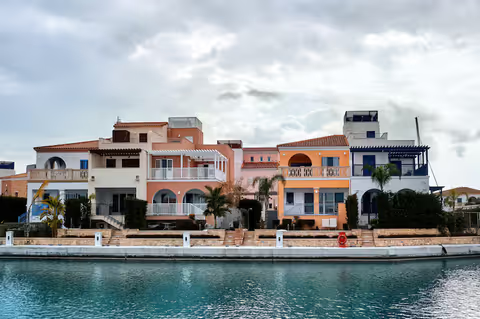
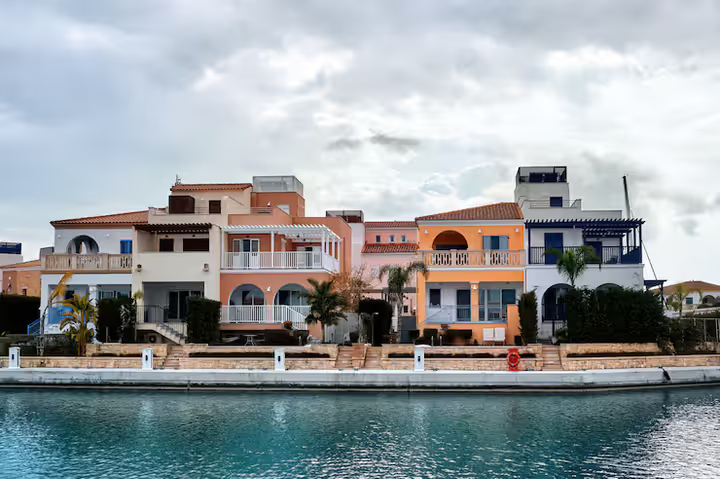
Dubai townhouses are low-rise residential units that combine private living spaces with shared community features. They typically include multiple floors, private entrances, and access to amenities such as parks, walkways, and community centers. This housing format exists to meet the demand for family-friendly living that sits between high-rise apartments and standalone villas.
The concept gained prominence as Dubai expanded beyond its traditional apartment-heavy districts. Master-planned communities introduced townhouses to provide structured neighborhoods with controlled density, modern infrastructure, and predictable maintenance standards. These properties are commonly found in newer developments designed around schools, retail clusters, and transport connectivity.
Townhouses are now a core part of Dubai’s residential ecosystem. They appeal to residents seeking more space than an apartment while maintaining community integration and urban accessibility.
Why Dubai Townhouses Matter Today
Dubai’s population growth, driven by expatriates, long-term residents, and investors, has reshaped housing preferences. Townhouses respond to this shift by offering balanced living environments suitable for families, professionals, and long-term residents.
This topic matters today because:
-
Urban expansion has increased demand for structured residential communities
-
Families prefer multi-level homes with shared outdoor areas
-
Investors and residents seek predictable regulations and transparency
Townhouses also address practical challenges. They reduce congestion compared to high-rise living while remaining more efficient than standalone housing. For residents, this means improved privacy, better space utilization, and access to shared infrastructure without isolation.
From a policy and planning perspective, townhouses help Dubai manage land use efficiently while maintaining quality-of-life standards. As a result, they are increasingly featured in long-term urban development plans.
Recent Market Updates and Trends
Over the past year, Dubai’s townhouse segment has experienced notable shifts influenced by population trends and regulatory clarity.
Key developments observed since 2025:
-
Increased focus on suburban master communities
-
Higher demand for family-oriented layouts
-
Improved transparency in property registration systems
In Q3 2025, Dubai Land Department (DLD) reported continued growth in residential registrations within planned communities, including townhouses. Developers emphasized sustainability features such as energy-efficient layouts and pedestrian-friendly zones.
Another trend is the rise of long-term residency planning. With residency reforms introduced between 2024 and 2025, more residents are opting for stable housing arrangements, making townhouses a preferred option.
Market Trend Snapshot
| Trend Area | Direction | Notes |
|---|---|---|
| Community Planning | Upward | Emphasis on green spaces |
| Family Demand | Stable Growth | Linked to schooling access |
| Regulatory Transparency | Improved | Digital land records |
These updates show that townhouses remain aligned with Dubai’s long-term residential strategy.
Legal and Regulatory Framework in Dubai
Dubai townhouses are governed by a structured legal framework designed to protect residents, developers, and investors. The Dubai Land Department (DLD) oversees property registration, while the Real Estate Regulatory Agency (RERA) manages compliance and community regulations.
Key regulatory considerations include:
-
Mandatory registration of property rights through DLD
-
Community rules set by Owners’ Associations
-
Standardized tenancy regulations under RERA
For residents, tenancy contracts must follow Ejari registration requirements. This ensures legal recognition and dispute resolution support. Owners’ Associations manage shared areas, maintenance standards, and community rules, creating uniform living conditions.
Government initiatives such as digital title deeds and unified tenancy systems have simplified documentation since 2024, reducing administrative delays and improving transparency.
These policies contribute to Dubai’s reputation for structured property governance and investor confidence.
Practical Tools and Resources for Understanding Townhouses
Several digital platforms and official resources help residents and investors understand townhouse-related information in Dubai.
Helpful resources include:
-
Dubai Land Department (DLD) portal for property records
-
Ejari system for tenancy registration
-
RERA guidelines for community rules
-
Dubai REST app for ownership insights and documentation
These tools provide access to verified information, ensuring compliance with local regulations. Market data platforms also help users understand location-based trends, community planning details, and infrastructure updates.
Resource Overview Table
| Tool / Platform | Purpose |
|---|---|
| Dubai REST App | Property records and updates |
| Ejari System | Tenancy documentation |
| DLD Portal | Registration and verification |
| RERA Resources | Regulatory guidance |
Using official platforms reduces misinformation and supports informed decision-making.
Common Questions About Dubai Townhouses
What defines a townhouse in Dubai?
A townhouse is a multi-level residential unit with a private entrance, often part of a planned community with shared amenities and management rules.
Are townhouses suitable for families?
Yes. They typically provide more living space, access to outdoor areas, and proximity to schools and community facilities.
How are townhouse communities managed?
Most communities are overseen by Owners’ Associations that manage shared facilities, enforce rules, and coordinate maintenance standards.
Do townhouses follow different regulations than apartments?
The core property laws are the same, but community rules and maintenance structures may differ due to shared facilities and layouts.
Is long-term residency common in townhouse communities?
Yes. Many residents choose townhouses for extended stays due to stability, space, and neighborhood planning.
Key Takeaways and Final Thoughts
Dubai townhouses represent a practical housing option within the city’s evolving residential landscape. They exist to balance space, community living, and regulatory clarity, making them suitable for families, professionals, and long-term residents.
Their growing relevance is supported by:
-
Urban expansion strategies
-
Regulatory improvements
-
Increased demand for structured communities
With transparent laws, digital tools, and consistent planning updates, townhouses continue to align with Dubai’s long-term development goals. Understanding their context, regulations, and available resources helps residents navigate the property ecosystem with confidence.
This guide provides an educational overview designed to support informed understanding without promotional intent, ensuring clarity and compliance with advertising and content standards.