How Medical Devices Work: A Simple Explanation for Everyone
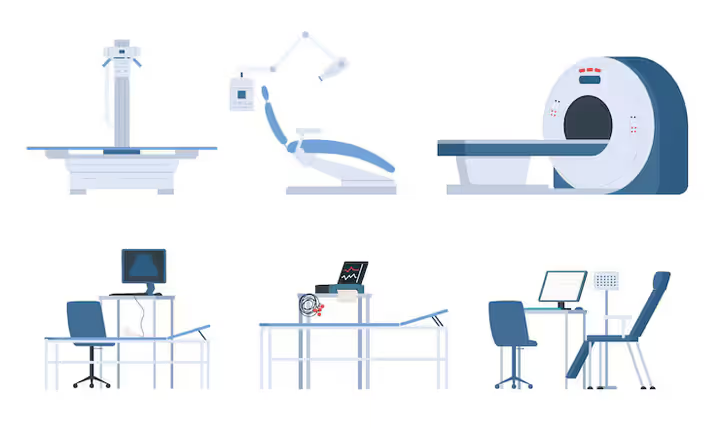
Medical devices are tools, instruments, and digital systems designed to support healthcare by helping detect, monitor, and manage human health conditions. They exist to make healthcare safer, more accurate, and more efficient. These devices range from everyday items—like thermometers and blood pressure monitors—to advanced instruments such as MRI scanners and implantable devices.
Their development is driven by the need for better diagnosis, improved patient monitoring, and more reliable decision-making in clinical settings. As healthcare has shifted toward technology-enabled care, medical devices have become essential for hospitals, clinics, and even home environments where digital health tools are increasingly used.
Importance – Why Medical Devices Matter Today
Medical devices affect almost everyone at some point in life. They play a central role in healthcare because they help:
-
Detect health conditions early
-
Support accurate clinical decisions
-
Monitor long-term health changes
-
Enhance safety during medical procedures
-
Improve communication between patients and healthcare teams
Modern healthcare systems rely on technology that provides real-time data and reliable measurements. This reduces uncertainty and helps clinicians make informed evaluations. For individuals, access to personal monitoring tools encourages a better understanding of their own health patterns.
Medical devices also solve major challenges such as:
-
Limited availability of healthcare professionals
-
Increasing need for remote monitoring tools
-
Rising importance of digital health records
-
Demand for faster, more precise testing
Because of these needs, innovation in this field continues to grow and influence global health outcomes.
Recent Updates – Key Developments From the Past Year
Technology in the medical device sector evolves rapidly. Some notable updates from the past year include:
● Growth of AI-Enabled Diagnostics (2024–2025)
Artificial intelligence tools have been integrated into imaging systems, wearable sensors, and monitoring platforms. These updates improve data interpretation and support early detection.
● Expansion of Remote Monitoring Devices
In 2024, several healthcare providers worldwide adopted connected sensors for tracking heart rate, sleep patterns, and respiratory conditions. This expansion supports home-based care.
● Advances in Implant Technology
By early 2025, new biocompatible materials and wireless communication features were integrated into implantable devices, improving durability and long-term tracking.
● Updated Digital Interfaces for Equipment
Many manufacturers released improved software dashboards in 2024 to simplify data display and enhance user understanding.
● Increased Focus on Cybersecurity
Since mid-2024, healthcare organizations have emphasized secure device connectivity to protect medical data and reduce digital risk.
These developments show that medical devices are moving toward automation, interconnected systems, and improved user accessibility.
Laws or Policies – How Regulations Shape Medical Devices
Medical devices operate under strict national and international rules designed to ensure safety, reliability, and ethical use. While regulations vary by region, most policies focus on device classification, testing requirements, and ongoing monitoring.
Key regulatory influences include:
● Device Classification Frameworks
Devices are typically categorized by risk level, ranging from low-risk tools (like bandages or stethoscopes) to high-risk systems (such as pacemakers). Each category follows specific evaluation standards.
● Safety and Performance Standards
Governments require documented evidence demonstrating that a device works as intended and can be used safely by healthcare professionals or the public.
● Quality Management Requirements
Manufacturers must follow quality control processes to ensure accuracy, stability, and manufacturing consistency.
● Post-Market Surveillance Rules
Even after approval, devices must be monitored for performance updates, reported issues, and technical adjustments.
● Digital Health and Data Guidelines
Connected devices that store digital information must comply with privacy and data-protection rules.
These policies are essential because they protect users and maintain trust in healthcare technologies.
Tools and Resources – Helpful Platforms for Learning About Medical Devices
Several tools, websites, and digital platforms help individuals and professionals understand how medical devices function. These resources provide structured information, technical explanations, and regulatory updates.
Helpful Online Tools
-
Device classification lookup tools
-
Interactive regulatory guidance platforms
-
Digital health safety checklists
-
Risk evaluation templates
Useful Websites
-
Global health regulatory bodies
-
Clinical data repositories
-
Medical technology information libraries
Technical Resources
-
Digital charts for device comparison
-
Technical glossaries
-
Checklists for understanding device features
-
Online learning modules for technology fundamentals
These materials are particularly helpful for students, researchers, and anyone interested in understanding how different device types operate.
How Medical Devices Work – Key Principles Explained
Medical devices operate using a combination of engineering, digital systems, and biological understanding. Below is a simplified explanation of how different categories of devices function.
Diagnostic Devices
Diagnostic devices help identify health conditions by collecting and interpreting physical, chemical, or biological signals.
Examples include:
-
Thermometers
-
Glucose monitors
-
Ultrasound machines
-
Imaging devices
How they work:
They gather data through sensors, light waves, sound waves, electrical signals, or chemical reactions. This information is then converted into readable output such as numbers, graphs, or images.
Monitoring Devices
Monitoring devices observe health status over time and track changes in the body.
Examples include:
-
Blood pressure monitors
-
Heart rate sensors
-
Sleep trackers
-
Oxygen saturation monitors
How they work:
They typically use biometric sensors to record data continuously or at intervals. Many modern devices send this information to digital applications for easier tracking.
Therapeutic Devices
Therapeutic devices support treatment by providing controlled physical or mechanical effects.
Examples include:
-
Infusion pumps
-
Respiratory support systems
-
Muscle stimulators
How they work:
They deliver precise levels of support or stimulation based on user settings and built-in safety systems.
Surgical Devices
These include instruments and equipment used during medical procedures.
Examples include:
-
Surgical tools
-
Robotic surgery systems
-
Imaging-assisted guided instruments
How they work:
They rely on mechanical precision, advanced sensors, and user-controlled interfaces to support accurate procedures.
Wearable Devices
Wearables are small, portable health-tracking tools used in daily life.
Examples include:
-
Activity trackers
-
Smart sensors
-
Health-monitoring bracelets
How they work:
They use micro-sensors that detect motion, temperature, or electrical activity. Data is transferred to mobile apps for analysis.
Simple Comparison Table: Types of Medical Devices
| Device Category | Purpose | Typical Features |
|---|---|---|
| Diagnostic | Detect health conditions | Sensors, imaging, chemical indicators |
| Monitoring | Track long-term health | Continuous measurement, alerts |
| Therapeutic | Support treatment | Controlled delivery or stimulation |
| Surgical | Assist procedures | Precision tools, robotic interfaces |
| Wearables | Daily health tracking | Mobile connectivity, compact sensors |
FAQs
What makes a medical device different from regular electronic tools?
Medical devices follow strict safety regulations and are designed specifically for healthcare monitoring, diagnosis, or support. They must meet national and international performance standards.
Do all medical devices use digital technology?
Not always. Some devices are mechanical or manual, while many modern devices use digital components for accuracy and convenience.
Why do medical devices require frequent updates?
Updates improve performance, accuracy, and security—especially for connected devices that handle digital health information.
Can individuals understand how devices work without technical knowledge?
Yes. Many devices are designed to be user-friendly, and simplified guides help people understand their basic functions.
Are wearable health devices considered medical devices?
Some wearables are classified as medical devices, while others are categorized as general wellness tools depending on their intended use and accuracy standards.
Conclusion
Medical devices support health systems by providing accurate, reliable information and innovative tools for monitoring and diagnosis. Their development continues to grow with advancements in AI, digital interfaces, and remote monitoring technologies. As regulations guide their design and use, individuals and professionals benefit from safer and more effective tools. Understanding how these devices work helps us appreciate their role in everyday healthcare and their importance in shaping the future of medical technology.