Unlike ordinary consumer rubber products, industrial rubber components are often engineered for specific temperatures, pressures, chemicals, mechanical loads, and environmental conditions. Understanding the different types of products and their applications can help businesses choose suitable materials and manage maintenance costs more effectively.
What Are Industrial Rubber Products?
Industrial rubber products are manufactured components made from natural rubber, synthetic rubber, or specialized rubber compounds. They can be produced in many forms, including sheets, seals, gaskets, hoses, belts, rollers, mounts, diaphragms, and custom-molded parts.
Manufacturers select rubber compounds according to the operating environment. For example, a component exposed to petroleum-based fluids may require a different material from one operating outdoors under ultraviolet radiation and changing temperatures.
Common Industrial Rubber Materials
Several rubber materials are widely used for industrial applications.
-
Natural rubber: Known for elasticity, flexibility, and good mechanical strength.
-
Nitrile rubber (NBR): Commonly selected for applications involving oils and fuels.
-
EPDM rubber: Often used where weather, ozone, water, and heat resistance are important.
-
Silicone rubber: Suitable for applications requiring broad temperature performance.
-
Neoprene: Used for applications requiring a balance of weather, oil, and mechanical resistance.
-
Fluoroelastomers: Often selected for demanding chemical and high-temperature environments.
The appropriate material depends on the application rather than simply choosing the most expensive option.
Major Types of Industrial Rubber Products
Industrial rubber products cover a broad category of engineered components. Each type serves a different mechanical or operational purpose.
Industrial Rubber Seals
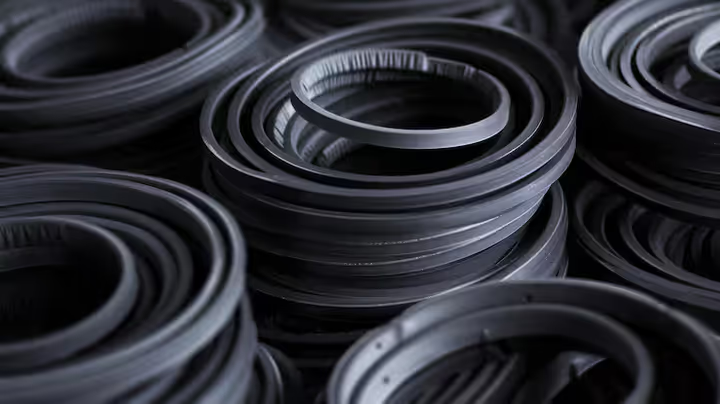
Rubber seals are used to prevent the unwanted movement of liquids, gases, dust, or other contaminants between surfaces.
They are commonly found in pumps, valves, hydraulic equipment, industrial machinery, automotive systems, and processing equipment.
Common examples include:
-
O-rings
-
Oil seals
-
Hydraulic seals
-
Shaft seals
-
Custom rubber seals
-
Rubber sealing strips
Correct seal selection can help reduce leakage, equipment downtime, and premature component failure.
Rubber Gaskets
Rubber gaskets create a barrier between two connected surfaces. They are frequently used in piping systems, machinery, pumps, tanks, compressors, and industrial processing equipment.
Gasket performance depends on factors such as:
-
Temperature
-
Pressure
-
Chemical exposure
-
Surface condition
-
Compression
-
Material compatibility
A properly selected gasket can support reliable equipment operation and reduce maintenance requirements.
Industrial Rubber Hoses
Rubber hoses are designed to transport fluids, gases, slurries, or other materials. Different hose constructions are developed for applications such as hydraulic systems, water transfer, air supply, chemical processing, and material handling.
When selecting an industrial hose, businesses typically consider working pressure, temperature range, internal fluid compatibility, flexibility, and required length.
Rubber Conveyor Belts
Conveyor belts are widely used in manufacturing, mining, logistics, agriculture, recycling, and material-handling operations.
Industrial rubber conveyor belts can be engineered for different loads and operating conditions. Some applications require resistance to abrasion, while others may require resistance to heat, oil, or specific chemicals.
Rubber Rollers
Rubber rollers are used in printing equipment, packaging machinery, manufacturing systems, textile equipment, material handling, and other industrial processes.
Their surface characteristics can be customized for particular applications. Hardness, friction, dimensional accuracy, and resistance to wear can all influence roller performance.
Rubber Vibration Mounts
Industrial machinery can generate significant vibration during operation. Rubber vibration mounts and isolation components help reduce the transmission of vibration and mechanical shock.
They are commonly used in:
-
Motors
-
Pumps
-
Compressors
-
Generators
-
Industrial machinery
-
HVAC equipment
Proper vibration isolation can contribute to equipment stability and help reduce noise and mechanical stress.
Where Are Industrial Rubber Products Used?
Industrial rubber components are used across numerous sectors because rubber can be engineered to provide different combinations of flexibility, durability, sealing performance, and resistance.
Manufacturing
Factories use rubber components throughout production equipment, automation systems, pumps, conveyors, and material-handling machinery.
Seals, belts, hoses, rollers, and vibration-control components are particularly common.
Automotive and Transportation
Rubber components play an important role in vehicles and transportation equipment. They can be found in hoses, seals, mounts, gaskets, suspension components, and vibration-control systems.
Construction
Construction equipment and building systems use rubber products for sealing, vibration isolation, protection, and fluid transfer.
Specialized rubber components may be used in heavy machinery, pumps, hydraulic systems, and infrastructure applications.
Oil and Gas
The oil and gas sector requires materials that can operate under demanding temperature, pressure, and chemical conditions.
Specialized seals, gaskets, hoses, and other elastomeric components can be used throughout equipment and fluid-handling systems.
Food and Beverage Processing
Food-processing equipment may require rubber materials designed for specific hygiene and temperature requirements.
Material selection is particularly important because components can come into contact with cleaning agents, water, oils, or processed materials.
Pharmaceutical and Chemical Industries
Chemical and pharmaceutical operations can expose components to aggressive substances and cleaning processes. Rubber material compatibility therefore becomes an important consideration when selecting seals, gaskets, tubing, and other components.
Benefits of Industrial Rubber Products
Flexibility and Elasticity
Rubber can deform under mechanical force and return toward its original shape. This characteristic makes it useful for sealing, vibration isolation, shock absorption, and flexible connections.
Sealing Performance
Rubber can conform to mating surfaces and help create effective barriers against fluids, gases, dust, and contaminants.
Vibration and Shock Control
Rubber components can absorb and dampen mechanical vibration. This can be useful for machinery where excessive vibration could affect performance or accelerate wear.
Resistance to Environmental Conditions
Specialized rubber compounds can be formulated to resist conditions such as moisture, ozone, UV exposure, oils, chemicals, and elevated temperatures.
However, no single rubber material performs equally well in every environment. Compatibility should always be evaluated for the intended application.
Custom Manufacturing
Many industrial rubber components can be manufactured according to specific dimensions, shapes, hardness requirements, and performance characteristics.
Custom rubber molding can be useful when standard components do not meet equipment requirements.
How Are Industrial Rubber Products Manufactured?
Industrial rubber manufacturing generally involves several stages.
Material Formulation
Raw rubber is combined with additives and other ingredients to achieve the desired physical and chemical characteristics.
The formulation can influence hardness, elasticity, temperature resistance, durability, and chemical compatibility.
Mixing
The selected materials are mixed to distribute ingredients throughout the rubber compound.
Consistent mixing is important because variations in compound composition can affect final product performance.
Forming
The rubber compound can be shaped using manufacturing processes such as molding, extrusion, or calendaring.
The selected process depends on the product's geometry, production requirements, and material characteristics.
Curing and Vulcanization
Curing transforms the rubber compound into a more stable and usable material. Vulcanization commonly uses heat and curing agents to create cross-links within the rubber.
This process affects important properties such as elasticity, hardness, and durability.
Quality Inspection
Finished components may undergo dimensional, visual, mechanical, and material testing. Industrial buyers may also require documentation related to specifications, testing, or quality management.
How to Choose the Right Industrial Rubber Product
Selecting an industrial rubber component requires more than comparing prices. The operating environment and technical requirements should be evaluated first.
Identify the Operating Conditions
Determine the expected:
-
Operating temperature
-
Working pressure
-
Fluid or chemical exposure
-
Mechanical load
-
Movement and flexibility requirements
-
Environmental exposure
-
Expected service life
These factors help narrow down suitable materials.
Check Material Compatibility
A rubber material that performs well in water may not provide the same performance when exposed to petroleum products, solvents, or aggressive chemicals.
Material compatibility data should therefore be reviewed before purchasing components for critical applications.
Consider Product Dimensions
Seals, gaskets, hoses, belts, and other components need to match the equipment's dimensions and connection requirements.
Incorrect dimensions can lead to leakage, premature wear, or installation problems.
Evaluate Total Cost
The lowest purchase price does not necessarily represent the lowest overall cost.
Businesses may consider:
-
Product life
-
Replacement frequency
-
Installation costs
-
Maintenance requirements
-
Equipment downtime
-
Energy consumption
-
Warranty and supplier support
A component with a higher initial price may sometimes provide better long-term value if it performs reliably under the required conditions.
Industrial Rubber Products and Maintenance
Regular inspection can help identify signs of deterioration before they result in equipment problems.
Common Signs of Rubber Failure
Depending on the application, warning signs may include:
-
Cracking
-
Hardening
-
Swelling
-
Surface wear
-
Deformation
-
Loss of elasticity
-
Leakage
-
Abrasion
-
Discoloration
The cause of deterioration should be investigated rather than simply replacing the component with the same material.
Why Preventive Maintenance Matters
Preventive maintenance programs can help organizations identify worn seals, hoses, belts, and mounts before they cause unexpected equipment interruptions.
Maintenance schedules should be based on equipment specifications, operating conditions, manufacturer recommendations, and historical performance.
Industrial Rubber Market Trends
The industrial rubber sector continues to evolve as manufacturers look for materials that provide longer service life and improved performance.
Increasing Demand for Specialized Materials
Industries operating in demanding environments increasingly require rubber compounds with specific resistance characteristics.
Applications involving high temperatures, aggressive chemicals, extreme pressure, and outdoor exposure may require specialized elastomers rather than general-purpose rubber.
Growth of Automation
Industrial automation is increasing the need for reliable seals, hoses, rollers, belts, vibration mounts, and other components used in automated equipment.
As production systems become more sophisticated, component consistency and predictable performance become increasingly important.
Focus on Sustainability
Manufacturers are also exploring ways to reduce material waste, improve manufacturing efficiency, extend component life, and increase the responsible use of materials.
Longer-lasting components can potentially reduce replacement frequency and associated maintenance resources.
Industrial Rubber Products and Business Procurement
For companies purchasing industrial rubber components, supplier evaluation can be as important as product selection.
Businesses may review:
-
Product specifications
-
Material certifications
-
Quality-control processes
-
Manufacturing capabilities
-
Customization options
-
Delivery capacity
-
Technical support
-
Warranty terms
-
Replacement availability
For specialized applications, consulting a qualified engineer or material specialist can help ensure that the selected product is appropriate for the equipment and operating conditions.
Frequently Asked Questions
What are industrial rubber products used for?
Industrial rubber products are used for sealing, fluid transfer, vibration isolation, shock absorption, material handling, insulation, and protection in manufacturing and other industrial applications.
Which rubber is best for industrial use?
There is no single best rubber for every industrial application. The appropriate material depends on temperature, pressure, chemical exposure, mechanical stress, environmental conditions, and required service life.
What is the difference between natural and synthetic rubber?
Natural rubber is derived from natural latex and is known for properties such as elasticity and mechanical strength. Synthetic rubbers are manufactured chemically and can be engineered for specific characteristics such as oil, weather, chemical, or temperature resistance.
How long do industrial rubber products last?
Service life varies significantly depending on material, operating conditions, product design, installation, maintenance, and exposure to heat, chemicals, UV radiation, and mechanical stress.
Can industrial rubber products be customized?
Yes. Many industrial rubber components can be manufactured to specific dimensions, shapes, hardness levels, material specifications, and performance requirements.
Conclusion
Industrial rubber products are important components across manufacturing, construction, transportation, energy, chemical processing, agriculture, and many other sectors. Their flexibility, sealing ability, vibration-control characteristics, and material versatility make them suitable for a wide range of applications.
Choosing the right rubber product requires careful consideration of operating temperature, pressure, chemical compatibility, mechanical conditions, dimensions, and expected service life. Businesses can also improve equipment reliability by combining appropriate product selection with regular inspection and preventive maintenance.
As industrial equipment becomes more automated and performance requirements become more demanding, engineered rubber components are likely to remain an important part of modern industrial systems.