How Remote Patient Monitoring Works: A Simple Guide to Hospital-at-Home Tech
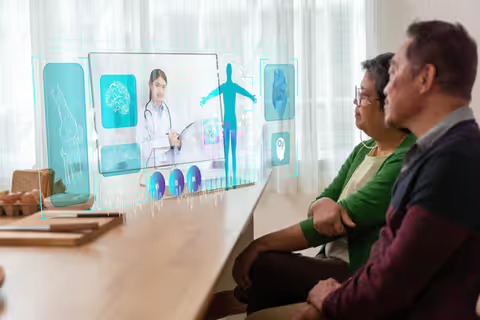
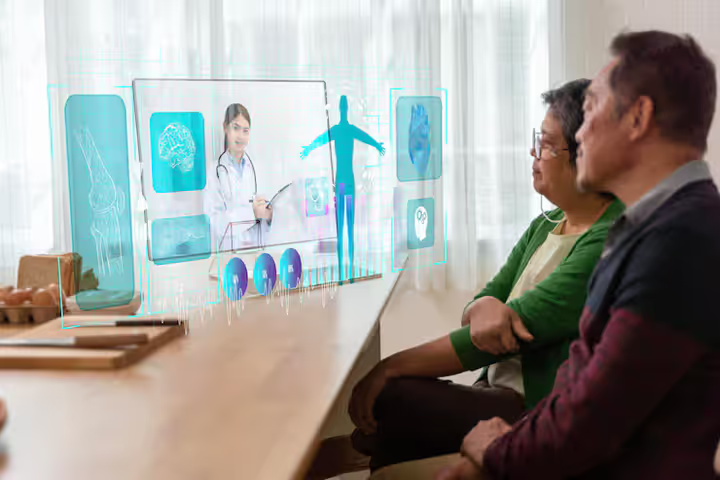
Remote Patient Monitoring (RPM) is a healthcare technology approach that allows medical professionals to observe patients’ health data outside traditional clinical settings. It is closely linked with hospital-at-home technology, where certain aspects of care are delivered in a patient’s residence rather than within a hospital building.
RPM exists to bridge a long-standing gap in healthcare delivery. Many patients require continuous observation for vital signs such as heart rate, blood pressure, glucose levels, or oxygen saturation, but do not always need to stay inside a hospital. Digital healthcare monitoring systems make it possible to collect this information using connected medical devices and securely transmit it to healthcare teams for review.
At its core, remote patient monitoring uses a combination of medical sensors, mobile health platforms, and cloud-based data systems. These components work together to provide timely insights into a patient’s condition while reducing the need for frequent in-person visits.
Importance: Why Remote Patient Monitoring Matters Today
RPM has become increasingly relevant as healthcare systems worldwide face rising patient volumes, aging populations, and a growing prevalence of chronic conditions. Hospital-at-home care models supported by RPM help address these challenges in a structured and measurable way.
This approach affects several groups:
-
Patients managing long-term conditions such as diabetes, hypertension, or heart disease
-
Older adults who benefit from regular monitoring without frequent travel
-
Healthcare providers seeking efficient ways to track patient outcomes
-
Health systems aiming to optimize bed usage and clinical resources
Key problems addressed by remote healthcare monitoring include delayed detection of health deterioration, limited access to care in rural areas, and the burden of repeated hospital visits. Continuous data flow allows earlier intervention, which can improve clinical decision-making and overall patient safety.
Key benefits often discussed in healthcare research
-
Improved continuity of care through real-time health data
-
Better patient engagement with treatment plans
-
Reduced strain on hospital infrastructure
-
Enhanced data accuracy compared to occasional check-ups
Recent Updates: Trends and Developments in the Past Year
Over the past year, RPM has continued to evolve alongside digital health innovation. Several notable developments have shaped how hospital-at-home technology is implemented.
In 2025, healthcare systems expanded the use of wearable medical devices capable of tracking multiple vitals simultaneously. These devices increasingly integrate with electronic health record platforms, improving interoperability.
Artificial intelligence has also become more prominent. In late 2025, multiple studies highlighted the role of AI-assisted analytics in identifying early warning signs from RPM data streams, helping clinicians prioritize cases that need attention.
Another trend has been the standardization of data security practices. With growing volumes of patient data being transmitted remotely, updated cybersecurity frameworks were introduced in 2024–2025 to strengthen data privacy and compliance in digital healthcare monitoring systems.
Notable trends at a glance
| Trend | Description | Timeframe |
|---|---|---|
| Multi-sensor wearables | Devices tracking heart rate, SpO₂, BP, and activity | 2025 |
| AI-driven insights | Predictive alerts based on RPM data | 2024–2025 |
| Interoperability standards | Better integration with health records | 2025 |
| Enhanced data security | Stronger encryption and compliance models | 2024–2025 |
Laws or Policies: Regulatory Influence on RPM
Remote patient monitoring is shaped by healthcare regulations, data protection laws, and national health programs. These rules aim to ensure patient safety, data privacy, and clinical reliability.
In many countries, RPM is governed under telehealth and digital health regulations. Policies often define:
-
Which health data can be collected remotely
-
How data must be stored and transmitted
-
The responsibilities of healthcare providers using RPM systems
In India, digital health initiatives under the National Digital Health Mission (NDHM) have encouraged the structured use of electronic health data, including remote monitoring records. Data protection requirements align with national privacy frameworks, emphasizing consent and secure handling of personal health information.
Other regions, such as the European Union and the United States, apply strict health data regulations like GDPR-aligned frameworks or HIPAA-based standards. These policies influence how remote healthcare monitoring platforms are designed and operated globally.
Tools and Resources: Common Technologies Used in RPM
Remote patient monitoring relies on a combination of hardware, software, and digital platforms. These tools are designed to collect, transmit, and analyze health information efficiently.
Common RPM tools and resources include
-
Wearable medical devices for vital sign tracking
-
Mobile health applications for patient data entry and alerts
-
Cloud-based healthcare monitoring systems
-
Secure dashboards for clinicians to review patient trends
-
Interoperable data platforms supporting electronic records
Examples of RPM data types
| Data Type | Measurement Source | Purpose |
|---|---|---|
| Heart rate | Wearable sensors | Cardiac monitoring |
| Blood pressure | Digital BP monitors | Hypertension tracking |
| Blood glucose | Connected glucometers | Diabetes management |
| Oxygen saturation | Pulse oximeters | Respiratory assessment |
| Activity levels | Motion sensors | Recovery monitoring |
These tools support evidence-based care by offering consistent data rather than isolated readings.
FAQs: Common Questions About Remote Patient Monitoring
What is the main goal of remote patient monitoring?
The primary goal is to track patient health data continuously outside clinical settings, enabling timely medical decisions and improved care coordination.
How does hospital-at-home technology use RPM?
Hospital-at-home models use RPM to observe patients recovering or managing conditions at home while maintaining clinical oversight similar to inpatient care.
Is remote patient monitoring suitable for all patients?
RPM is generally used for patients with chronic conditions, post-acute recovery needs, or those requiring regular observation. Suitability depends on clinical assessment.
How is patient data protected in RPM systems?
Most RPM platforms use encrypted data transmission, access controls, and compliance with healthcare data protection regulations to maintain privacy.
Does RPM replace in-person medical visits?
RPM complements traditional care. It supports ongoing monitoring but does not eliminate the need for physical examinations when required.
Conclusion
Remote patient monitoring represents a significant shift in how healthcare can be delivered beyond hospital walls. By combining connected medical devices, digital health platforms, and structured data analysis, RPM supports hospital-at-home technology in a practical and scalable way.
As healthcare systems continue adapting to modern challenges, RPM plays an important role in improving continuity of care, supporting clinical decisions, and enhancing patient experience. With ongoing advancements in technology, policy frameworks, and data security, remote healthcare monitoring is likely to remain a key component of future healthcare models.